
Tue–Sat 10:00–14:00 & 18:00–21:00 · Sun 10:30–18:00 · Monday closedDental emergency? +91 91334 31444

Planned oral surgery support

Wisdom Tooth Removal

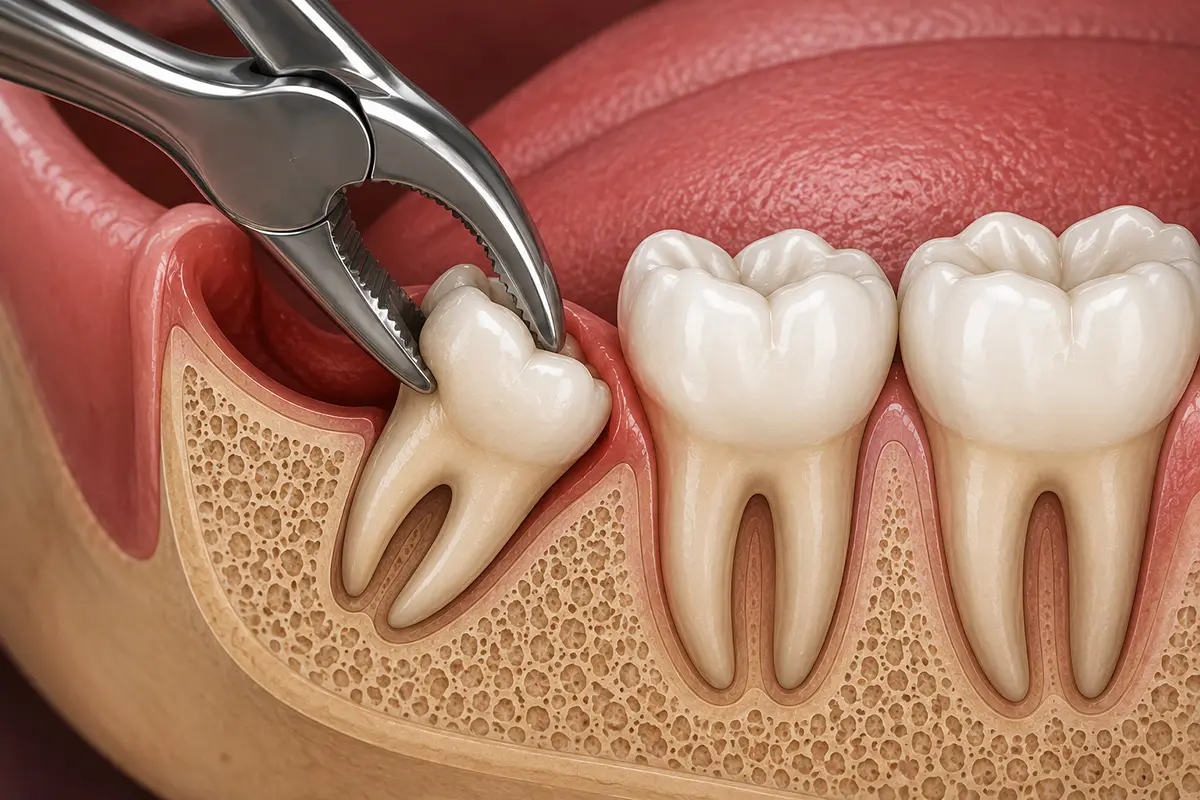
Wisdom teeth may need assessment when they are painful, repeatedly infected, difficult to clean or affecting nearby teeth.

At a glance

What this treatment may help with

The dentist evaluates the position of the wisdom tooth, surrounding gum, neighbouring teeth and available imaging before recommending monitoring or removal.

Reasons to arrange an assessment

  • Pain or swelling behind the last tooth
  • Repeated gum infection or food trapping
  • Difficulty cleaning the area
  • Damage or pressure affecting a neighbouring tooth

Potential benefits

  • Removes a recurring source of discomfort when indicated
  • May reduce repeated infection around the tooth
  • Protects adjacent areas when damage is present
  • Provides a planned approach with surgical consultation when needed

An examination and suitable imaging are required before a dentist can recommend treatment. Website information is not a diagnosis.

Your care journey

What the process usually involves

The exact sequence and number of visits depend on your examination and treatment plan.

  1. 01

    Assessment

    The tooth position, symptoms and imaging are reviewed.

  2. 02

    Planning

    The dentist explains whether monitoring, simple extraction or surgical removal is suitable.

  3. 03

    Anaesthesia

    Local anaesthesia is used; other options are discussed only when appropriate.

  4. 04

    Removal

    The tooth is removed using the planned technique and the area is cleaned.

  5. 05

    Aftercare

    You receive instructions for protecting the blood clot and managing recovery.

Helpful preparation

Before and after your appointment

Before treatment

  • Share medicines, allergies and relevant health history
  • Arrange transport if sedation is planned
  • Ask whether eating instructions apply to your anaesthesia
  • Plan a quieter recovery period after the procedure

After treatment

  • Follow the approved post-extraction instructions
  • Protect the blood clot during the first 24 hours
  • Use prescribed or dentist-approved medicines only
  • Call for bleeding that does not stop or worsening pain, swelling or fever

Questions

Common questions about wisdom tooth removal

Does every wisdom tooth need removal?

No. Some wisdom teeth can be monitored when they are healthy, functional and easy to clean.

How long does recovery take?

Recovery varies with the tooth position and procedure. Your dentist or surgeon will give advice specific to your case.

What is dry socket?

It is a painful complication in which the protective blood clot is lost or does not form properly. Contact the clinic for increasing pain after a few days.

Book with confidence

Would you like to discuss wisdom tooth removal?

Request a preferred appointment time. Our receptionist will call within six hours to confirm.

CallWhatsAppBook